
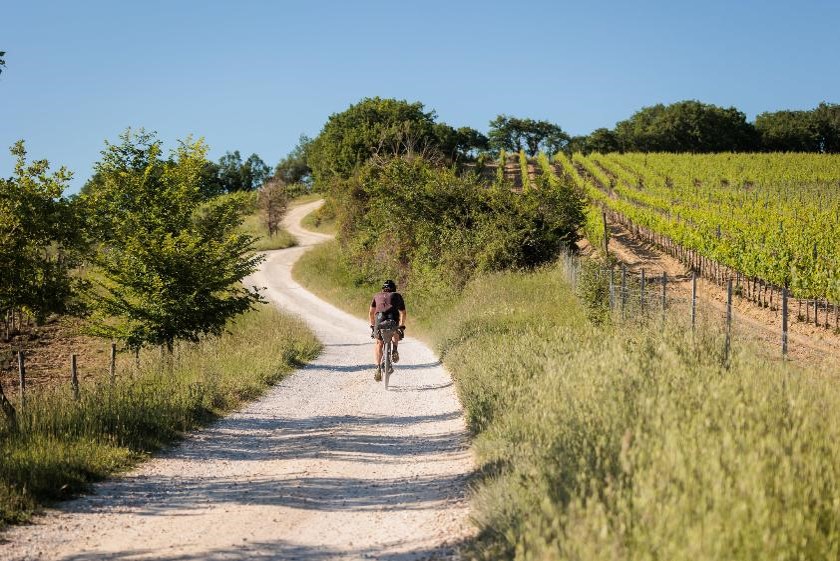
By Steve Ball.
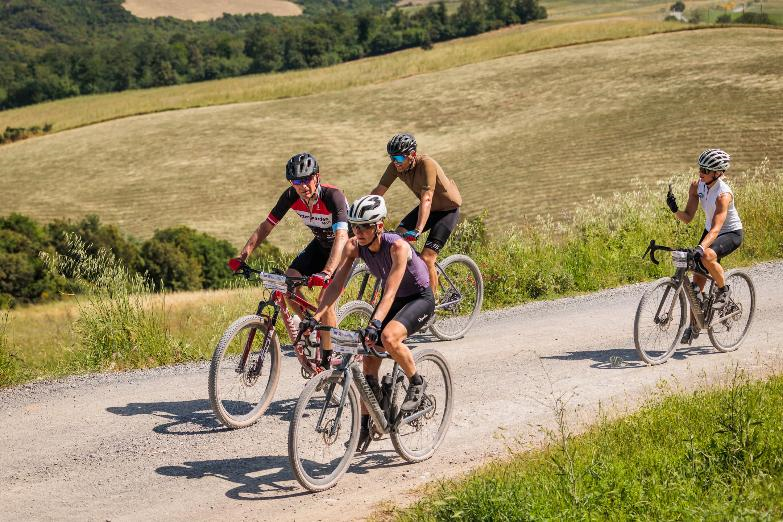
The Tuscany Trail (according to their webpage) is a no-race bikepacking event for gravel and mountain bikes. Think of a sportive, but with no bib numbers, no timing chips, no results and no medal.
It’s all about the adventure, the camaraderie and the opportunity to spend time in the Tuscany area
… and of course, lots of Italian food!
It has grown from 67 entries at the first one in 2014 to around 6,000 in the past few years. This sounds like a lot, however there are six different registration windows over the course of three days, and you can only start after you’ve registered. After this there is no fixed start time, so people set off whenever they’re ready. This means that while you’ve rarely alone, it’s never crowded either. The organisation is very relaxed, and this sets the tone perfectly.
This year, there were three route options:
- Newbie Route of 163 km, with 1,620 m of climbing which is expected to take two days.
- Normal Route, which was 452 km and had 5,486 m of climbing.
- Chianti Detour, an optional addition to the normal route, which was an extra 105 km with 1,680 m of climbing.
My ride
After riding out of the event HQ in Venturina Terme, the first climb of around 4 km and 200 m took us up the long, steep hill to the picturesque town of Campiglia Marittima with its narrow cobbled streets. That first climb with a loaded bike was a shock to the system, even in the relatively cool early morning.
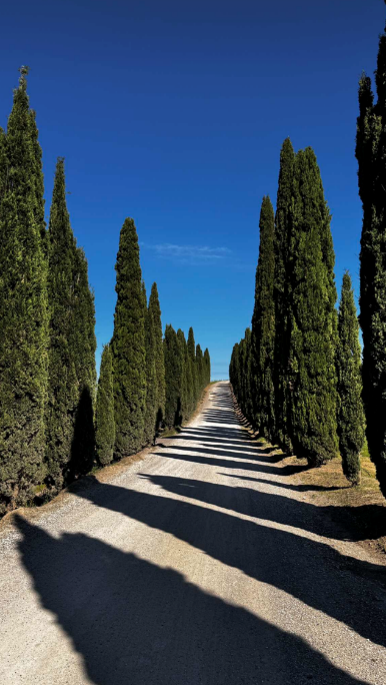
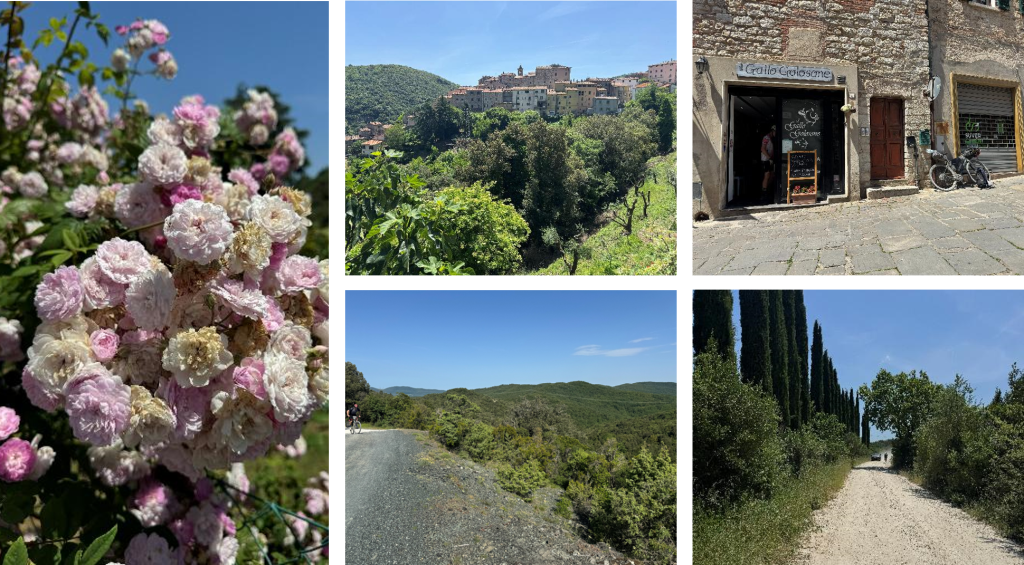
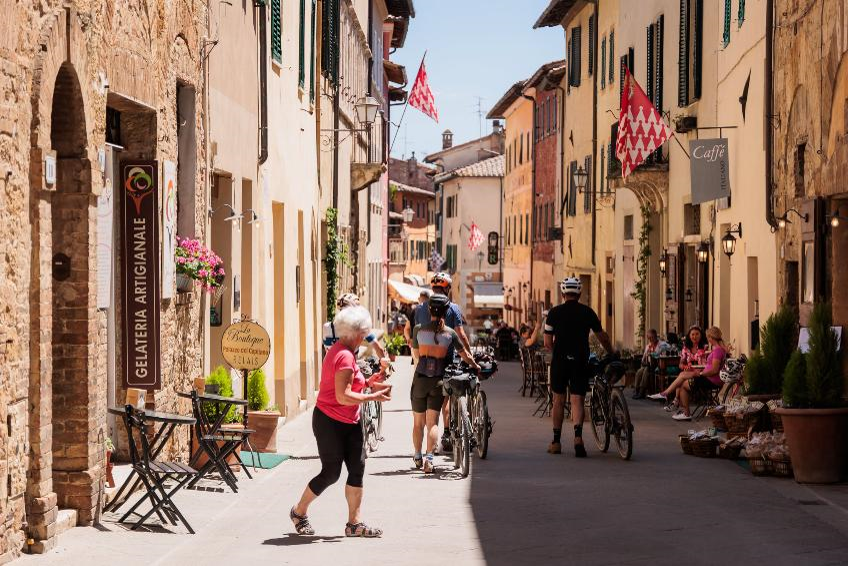
After descending steeply from Campiglia Marittima, the trail took us to the coast with beaches, viewpoints and café’s and then it was into the hills for the next four days. We passed through picturesque hilltop towns, vineyards and mile after mile of Strade Bianchi, gravel trails, road and tracks.
The first wine area we came to was Montalcino which was a special treat for me as I was introduced to Brunello di Montalcino wine many years ago on a memorable night in Edinburgh, it was great to see where one of my favourite wines comes from. After that the trail took us to the hilltop towns of Pienza and Siena, before I took the detour into the Chianti area.
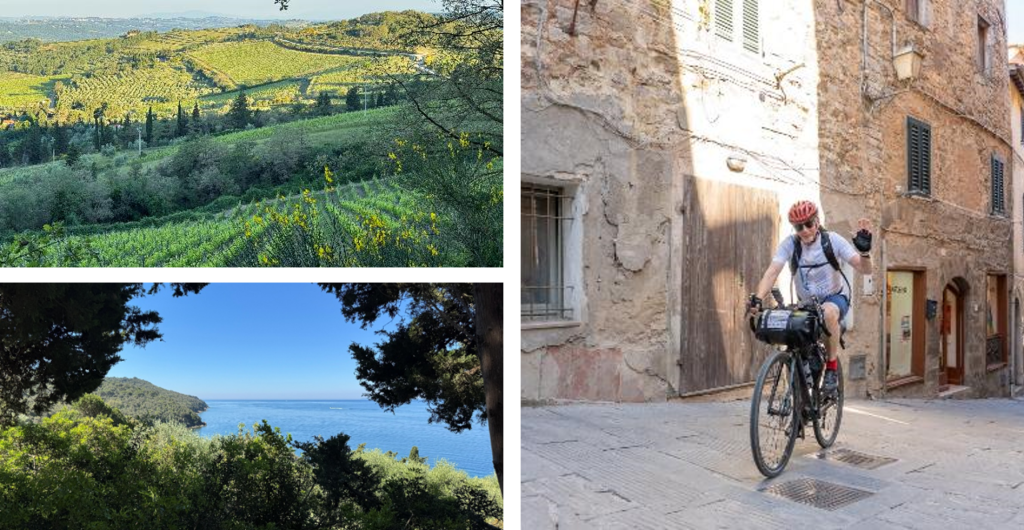
Every turn brought a spectacular new view, and we were enchanted by the warm Tuscan fragrances and birdsong.
The medieval city of Siena at halfway on the normal route was a welcome sight. The big shock was that the official trail route that we had been given did not take us to the Piazza Del Campo. Fortunately, I realised this shortly before starting to descend from the city, but I wasted a lot of time trying to find the Piazza. I’ll never know how badly I was lost in the maze of old dark streets, how many extra kilometres I rode, and how many times I circled the piazza before I found it because I didn’t record my ride that morning.
As the trail progressed, my focus had changed
While I enjoyed the landscapes and company of other cyclists on the first day, I also kept a close eye on my Garmin. It was vital for navigation, but I also scrolled screens often to make sure I maintained a ‘respectable’ average speed.
On the second day I didn’t switch from the map so much. My ‘conversion’ was confirmed on the third day. I’d had an early start, and while I occasionally wondered how far I’d travelled, I was more engrossed in the cycling and the scenery, and I didn’t realise I’d forgotten to start recording until well after midday.
After completing the Chianti Loop, I rejoined the main route and the concentration of cyclists increased. I also realised there were a lot of walkers who were going in the opposite direction. At first, I thought they were locals out for a Sunday walk, however I heard a lot of foreign voices. We were now on the Via Francigena, the route of an ancient pilgrimage from Canterbury to Rome, which now seems to be gaining in popularity.
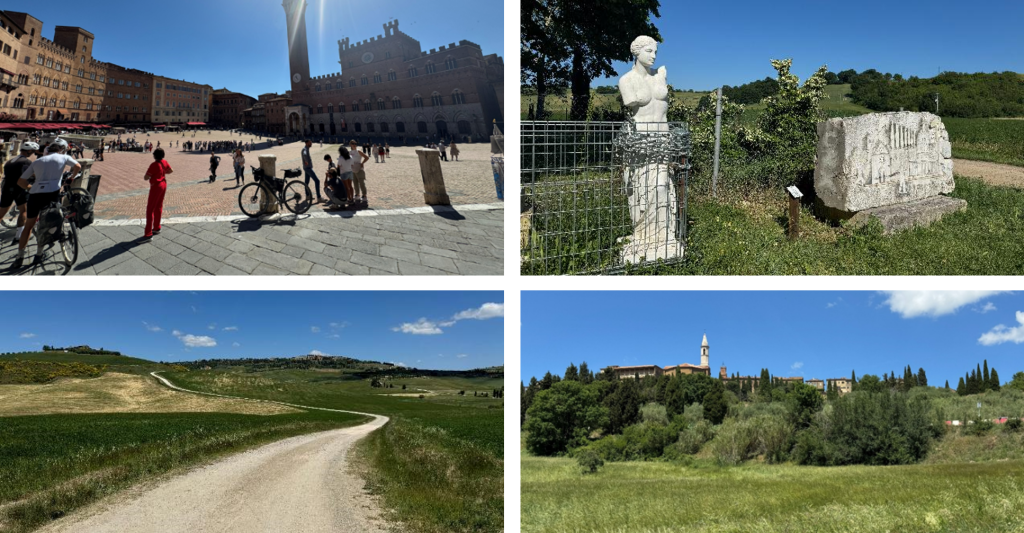
The fifth day was my final day on the trail; it was shorter and there was less climbing than on the previous three days. It passed through a natural conservation area, so for the first time there were fewer places to stop and buy food, or to replenish water. Eventually cars, houses, villages and then towns returned signalling the end of the ride and the return to ‘normality’.
What bike to use?
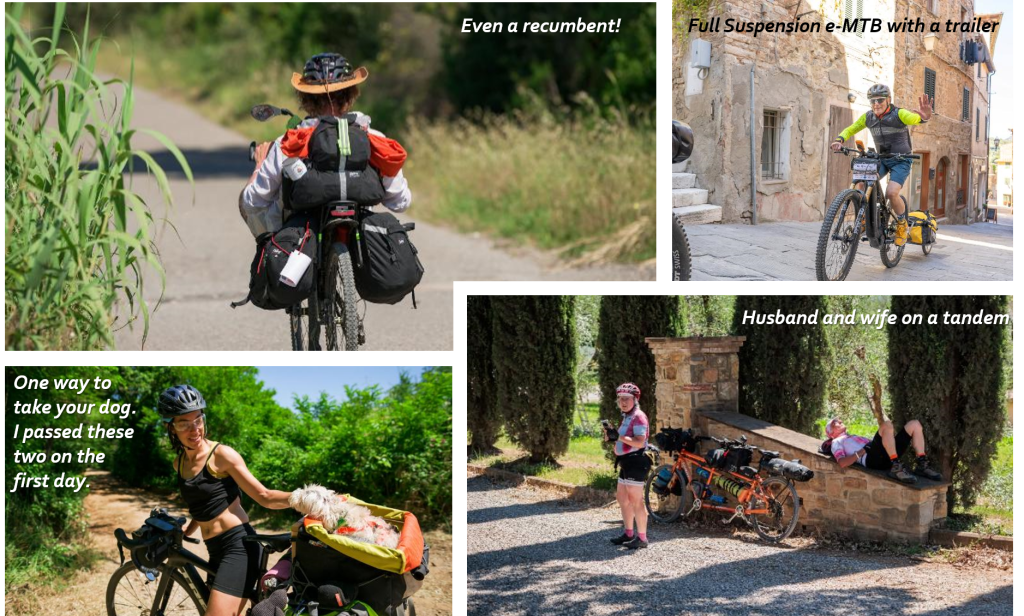
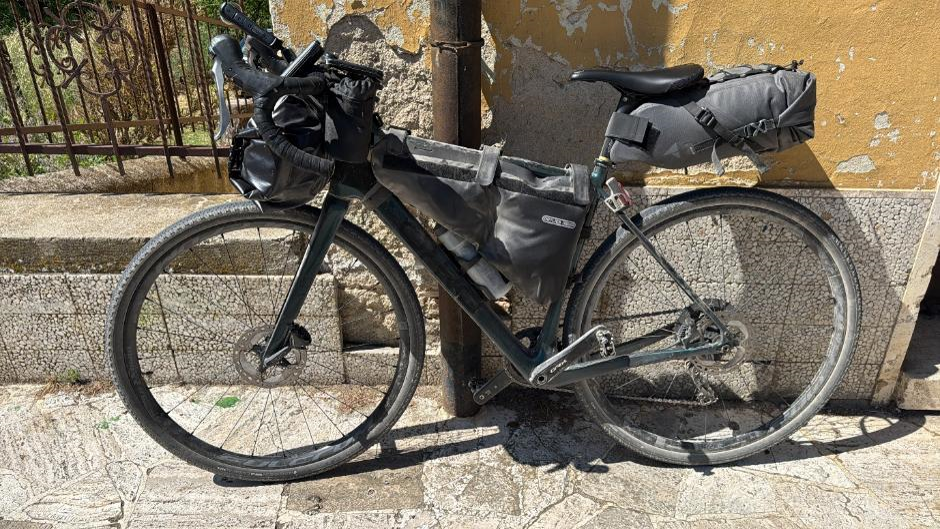
There were many different combinations of bike and luggage on the trail. Mountain bikes with ultra-wide handlebar bags and seat packs, gravel bikes like mine with a handlebar, frame and seat bags. Some had tailfins, some had panniers. There were people on e-bikes and tandems. A few with trailers. I saw two different ways to take dogs, one in a box, another in a trailer (the dog had to get out of the trailer and walk/run up the steepest of climbs).
Accommodation
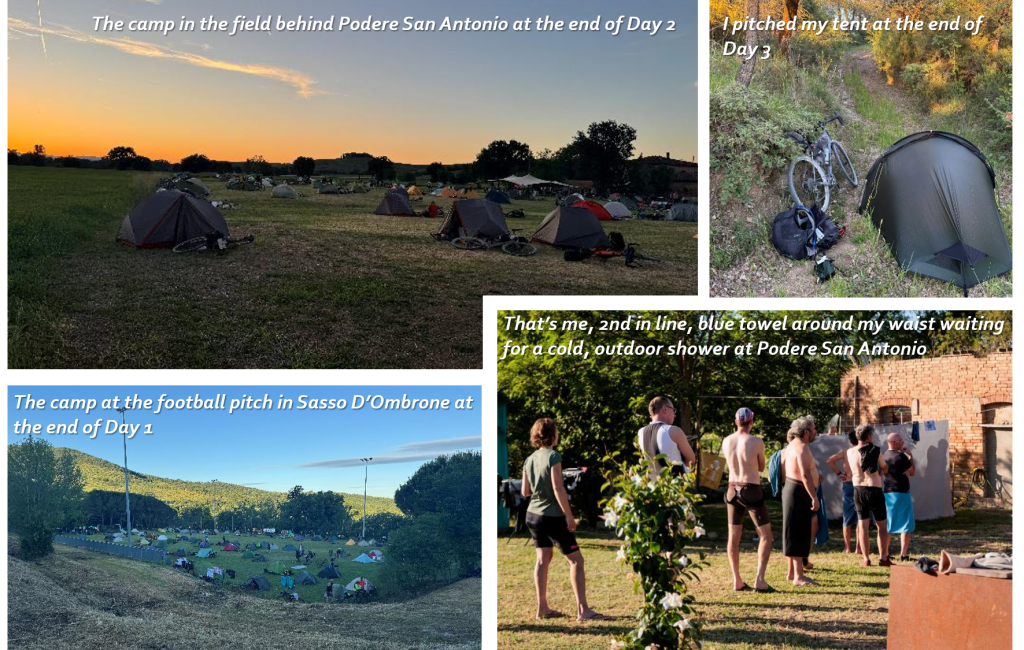
On three nights I camped at the official event campgrounds, these were usually fields or football pitches. In the Chianti area there was no base camp, so I pitched my tent near the top of the highest hill on the whole trip. There was no official campsite in the Chianti area.
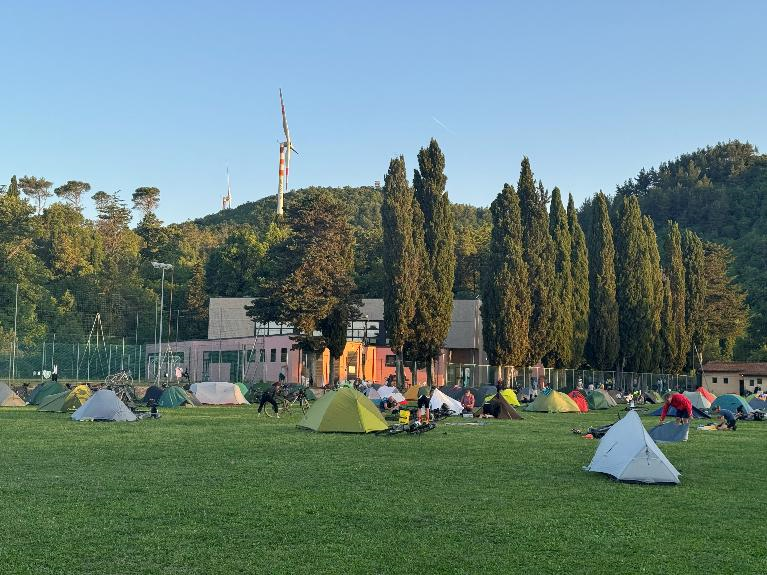
My last campground at the football pitch in Montecatini Val di Cecina was the only place I had a shower with warm water. The price for this was a long climb up to the town, followed by another significant climb to reach the campsite.
Some people seemed have a different interpretation of ‘bikepacking’. They travelled very light, maybe just one bag on their bike, or a backpack only. I guess they had a credit card and had booked accommodation in advance. That’s probably the most enjoyable way to complete the trail, but certainly needs a lot of organisation, planning and knowing that you’ll manage the distance required each day.
On the last day I spotted a group like this and decided to follow then to their accommodation to see how they did it. Unfortunately, the sign for my campsite said to turn right, and they went straight on. So, I never de-coded this mystery!
What I took
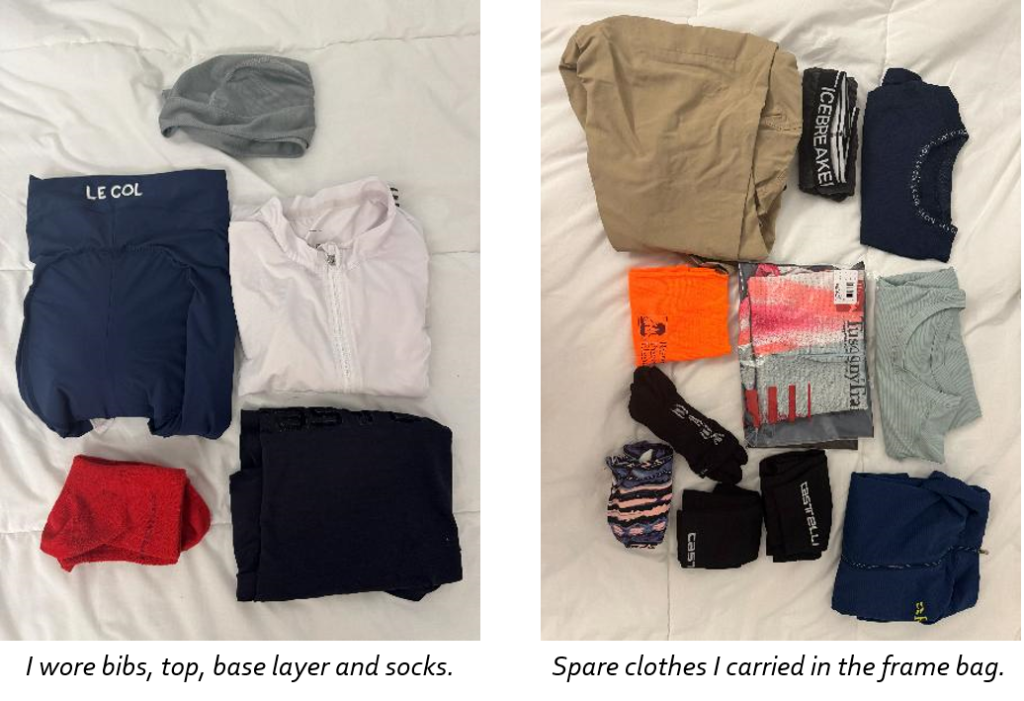
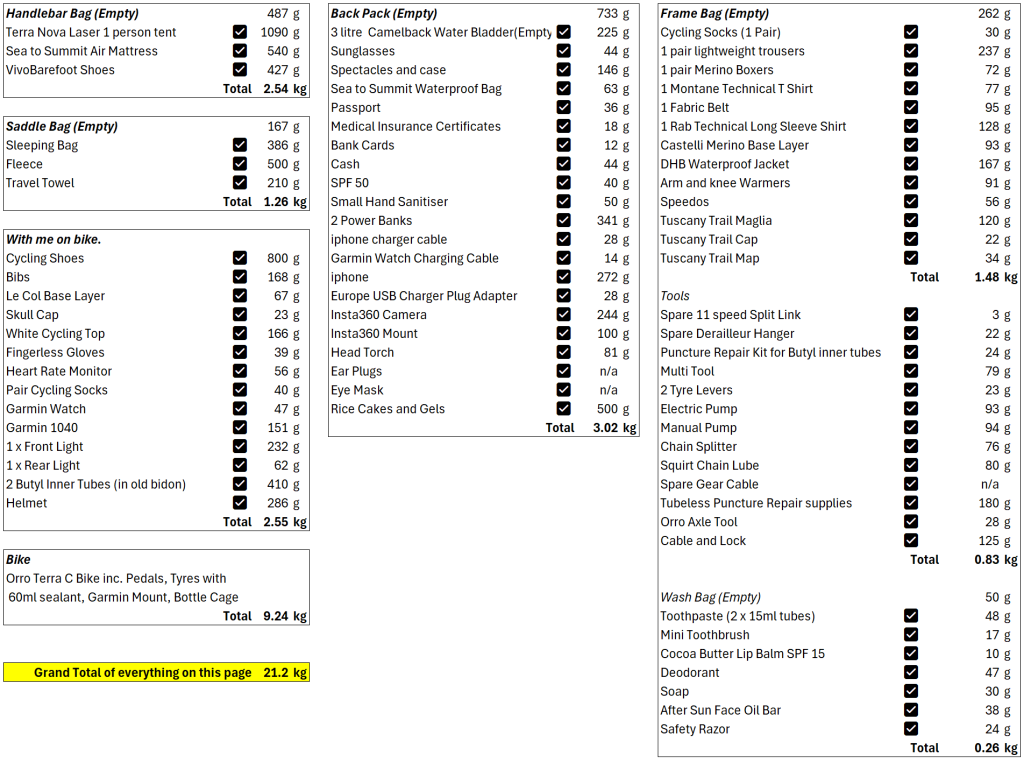
I had a handlebar bag with tent, mattress and a pair of barefoot shoes, a frame bag with clothes, toiletries, toolkit and power packs, and a seat pack with my sleeping bag, a fleece jacket and a travel towel. I also carried a backpack with a 3 litre camelbak bladder and day to day things like money, phone, etc.
Weight Watchers
My costs
Entry Fee €100.00
Medical Certificate £62.00
Easy Jet Return from Gatwick to Pisa (including bike box) £228.62
Trains in Italy €36.80
Bike Box Storage in Pisa €50.30
First night Hotel in Campiglia Marittima €109.90
Food and Drink €308.85 (breakdown below)
Last night apartment in Pisa €134.51
Total £927.33
Food and drinks:

I’d like to finish with a quote I read about the Tuscany Trail from Sherry Cardona, an ultra-endurance cyclist who seems to have made herself the face of the event:
“It’s the kind of adventure that stays with you, and changes how you think about cycling.”
I like that, it might just be true!
Leave a Reply